

What to Pack for a Solo Trip: The Things You'll Actually Be Glad You Brought
If you didn't pack it, you don't have it. Which is not a reason to pack for every possible version of the future.
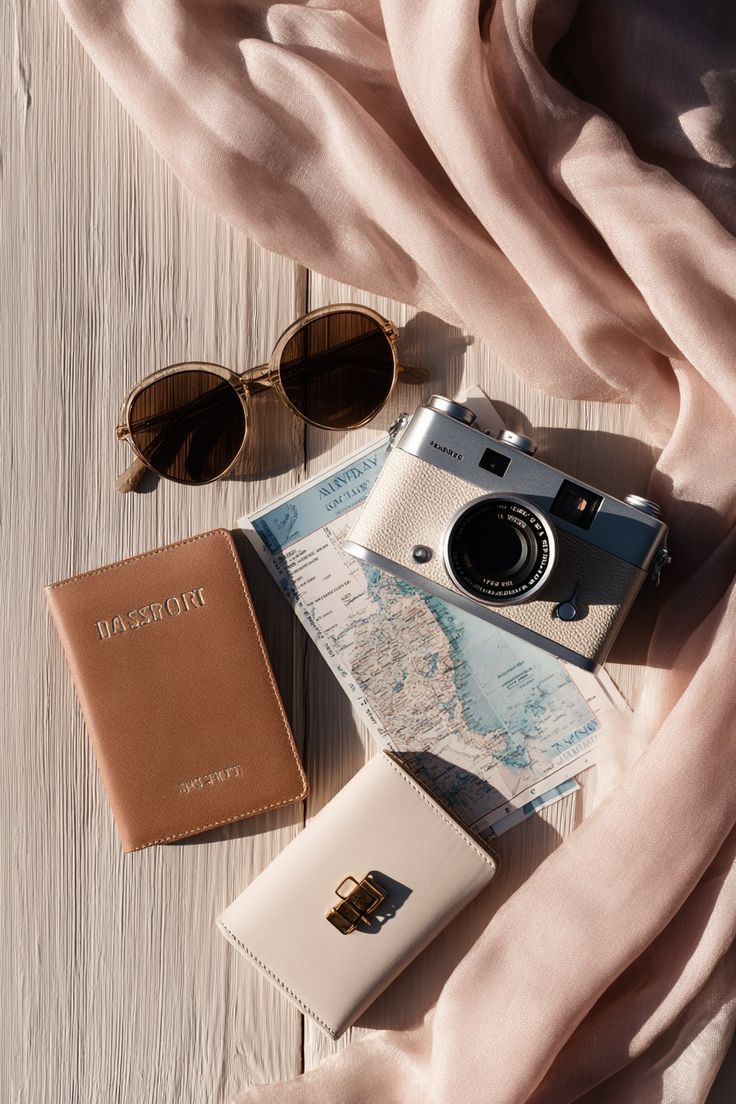
Packing for a solo trip is a slightly different exercise.
Not because women require some mysterious extra category of luggage. Because when you travel alone, there is no second suitcase.
Nobody else remembered the charger. Nobody has sunscreen in their bag. Nobody is carrying the power bank. Nobody brought painkillers. Nobody is standing next to you at 11:47 p.m. while you establish that your hotel room contains zero phone chargers and one decorative sewing kit.
If you didn't pack it, you don't have it.
Which does not mean you should prepare for every conceivable disaster. Honestly, the opposite.
The best solo packing list isn't the one that covers 400 hypothetical scenarios. It's the one that lets you move through the world without resenting your own bag.
So skip the 97-item checklist. Here's what actually earns its space.
First: Pack Less Than You Think
The founding principle of solo travel packing:
You are the luggage department.
Every gorgeous extra outfit you bring will eventually need to be lifted onto a train, dragged over cobblestones, hauled up four flights, wedged into an overhead rack, and taken into a bathroom stall with you because there's nobody outside to watch it.
Possibly carried uphill through Lisbon while you quietly reassess every decision that led you here.
Pack for the woman who has to carry the bag.
Not the woman standing serenely beside an open closet, imagining seventeen possible versions of the trip.
01 · A power bank
Close to non-negotiable when you're alone.
Your phone is simultaneously your map, boarding pass, train ticket, translator, camera, taxi, hotel reservation, payment method, connection to everyone you love, and the device currently informing you that you have been confidently walking the wrong way for twenty minutes.
A dead phone is annoying when you're traveling with someone. Alone, it can turn into an actual problem at exactly the wrong hour.
Bring a charged one. And charge it again during the trip, because a dead power bank is just a small brick you carried internationally.
02 · Two ways to pay
Do not let one card become the single point of failure for your entire trip.
Bring at least two usable payment methods and keep them in different places. If your wallet disappears, your backup should not disappear with it.
A small amount of local cash helps in plenty of destinations, especially for taxis, markets, and small restaurants that develop card machine problems at convenient moments.
You don't need to carry your entire budget strapped to your body like a medieval merchant. Just don't build your financial system out of one card and optimism.
03 · A crossbody bag you can forget you're wearing
The best travel bag usually isn't the prettiest one. It's the one you can wear for eight hours without thinking about it.
Comfortable. Easy to close properly. Big enough for essentials. Small enough that you don't accidentally start transporting your hotel room around the city. Appropriate for what you're actually doing that day.
You'll use it constantly, in every photo, on every street. Choose accordingly.
04 · Shoes you have already broken in
Not shoes that will probably become comfortable. Shoes that already are.
There's a meaningful difference, and travel is extraordinarily good at turning a minor shoe issue into the central plot of your day.
Whatever you're exploring in should have already proven itself on a long day at home.
Bring the beautiful shoes too. Just don't make them responsible for 18,000 steps across Rome.
05 · Blister bandages
Because despite point four, you will eventually override your own good judgment for the sake of an outfit.
Tiny, weightless, occasionally day-saving. Put a few in the bag and forget about them until the moment you need them badly.
06 · A refillable water bottle
Particularly worth it for walking-heavy trips, hot destinations, and long transit days.
Check whether tap water is considered safe where you're going and refill accordingly.
The important part isn't owning an attractive bottle. It's actually putting water in it more than once a day.
07 · Something to eat when everything goes sideways
Flights get delayed. Restaurants close. The bus takes three hours longer than anyone suggested. You arrive during that mysterious mid-afternoon window when every kitchen in town has collectively stopped serving food and nobody can tell you when they'll start again.
Keep something in the bag. Nuts, a bar, crackers, whatever travels well for you.
Not a doomsday supply. Just enough to keep hunger from becoming a crisis while you figure out dinner.
08 · Your actual medication
This sounds obvious right up until you're in a pharmacy in another country trying to describe what you take via Google Translate and a hopeful facial expression.
Bring enough for the trip plus a buffer for delays, and check the rules for bringing it into your destination, especially for prescription or controlled medicines. Some very ordinary medications are restricted in places you wouldn't expect.
Keep what matters accessible instead of buried in checked luggage. And don't assume the same brand, dose, or formulation exists everywhere.
09 · A very small health kit
Emphasis on very small. You're traveling, not opening a pharmacy.
What belongs in it depends on you and where you're going, but think familiar basics you already know how to use: a few bandages, blister treatment, your usual pain relief if that's appropriate for you, anything personal, and whatever's relevant to the destination.
For remote or higher-risk places, the list expands and deserves real research.
For four days in Amsterdam, you do not need to be equipped for field surgery.
10 · Period products before you need them
Yes, you can buy them almost anywhere. No, the specific thing you like will not necessarily be sitting in a shop next to your hotel at 10 p.m. on a Sunday.
If there's any chance you'll need them, bring enough to get through the first day or two. This matters most if you're particular about tampons, pads, a cup, period underwear, or specific pain relief.
Your cycle has not looked at your itinerary and has no plans to.
11 · One large lightweight layer
A scarf or oversized wrap is probably the highest performing item per gram in any suitcase.
Cold plane. Aggressively air-conditioned train. Unexpected wind on a headland. A church that requires more coverage. Sun on the back of your neck. A beach towel. A thing to sit on. An evening that got cooler than the afternoon promised.
One piece of fabric solving eight problems is exactly the kind of efficiency worth packing for.
12 · One outfit that makes you feel excellent
Not practical. Not moisture-wicking. Not optimized for volume.
Good.
Something you want to be wearing when you find the beautiful restaurant. When you meet someone. When you take yourself somewhere on purpose. When you decide at 6 p.m. that you are absolutely not going back to the hotel yet.
Packing efficiently does not mean spending five days dressed for a moderate hike you have no intention of taking.
13 · But not seven versions of that outfit
Here's where it falls apart.
You think: maybe we'll go somewhere nice.
Who is we?
You are traveling alone. You have invented hypothetical people and are now packing for their hypothetical dinner invitations.
Bring options. Then be ruthless about them. Most of us wear the same three favorite things on repeat anyway, at home and abroad.
Let the hotel mirror witness your outfit repetition. It will tell nobody.
14 · Clothes that combine without thinking
Solo travel is not the moment for garments that require a supporting cast of three other items to function.
Bring a small number of bottoms, tops you can rotate freely, layers, one nicer option, and whatever the climate and local expectations genuinely call for.
The test is simple: you open the bag in the morning and can get dressed without solving a puzzle before coffee.
15 · Something for unexpected cold
Hot places get cold. Planes are cold. Ferries are cold. Deserts get cold after dark. Mountains exist. Evenings happen. Wind has destroyed more optimistic packing strategies than rain ever has.
Check the actual forecast a day or two before you leave, rather than packing for the imaginary version of the destination that lives in your head.
16 · Earplugs
Tiny, cheap, and occasionally the difference between a good day and a ruined one.
Hotels. Hostels. Planes. Trains. Street noise. Walls made of optimism. Snoring strangers. Construction that starts at 7 a.m. Church bells that are charming at 4 p.m. and philosophically challenging at 6 a.m.
You cannot control the acoustics of an entire country. You can bring earplugs.
17 · An eye mask
Same logic.
You booked the beautiful room. The beautiful room has beautiful linen curtains. The beautiful linen curtains block approximately 4% of the Mediterranean sun.
Weighs nothing. Bring one if light affects your sleep at all.
18 · A travel adapter, if you need one
Check the plugs and voltage before you go.
Don't wait until your phone hits 11% to discover that your charger and the wall have irreconcilable differences.
For multi-country trips, one good universal adapter removes a whole category of small daily friction.
19 · A spare charging cable
Charging cables have an uncanny instinct for dying mid-trip, usually the night before an early flight.
A spare weighs almost nothing. Your phone is doing nine jobs.
Yes, you can buy another one nearly anywhere. Finding an electronics store doesn't need to be tomorrow's first cultural experience.
20 · Offline maps
You don't technically pack these. Pack them anyway.
Download the area before you need it, especially if you're arriving late, heading somewhere remote, hiking, crossing a border, or dealing with unreliable data.
Technology is wonderful. Redundancy is better, particularly when the alternative is standing on a dark street with no signal and a 6% battery.
21 · A screenshot of your accommodation details
Name, address, booking reference, anything you'll need in the first hour.
Because the exact moment your reception vanishes is the exact moment a taxi driver asks for the address.
Make the essential information available without the internet.
22 · Copies of important documents
What you need depends on where you're going, but keeping secure copies of key travel documents makes theft or loss enormously less painful.
Store them somewhere protected rather than loose in your camera roll or an unlocked folder.
The principle is simple: if something important disappears, you shouldn't simultaneously lose every piece of information required to replace it.
23 · Insurance details you can actually find
Buying travel insurance and then having no idea who you're insured with is a remarkably common combination.
Save the policy number and emergency contact somewhere you can reach quickly, ideally offline.
You don't want your first move during a real problem to be searching your inbox for "insurance maybe july final FINAL.pdf".
24 · A small laundry plan
On longer trips, washing a few things dramatically reduces what you need to bring.
Depending on your accommodation, that's laundry sheets, a bit of detergent, knowing where the laundromat is, or simply booking somewhere with a washing machine halfway through the trip.
Fourteen days does not require fourteen complete outfits. Civilization has washing machines, and using one is not a failure of planning.
25 · Sunscreen
Especially if you'll be outside for real stretches of the day.
Buy it there if that's easier and lighter. Bring it if you already have one your skin likes.
The point is using appropriate protection for your skin and your exposure, rather than realizing on day two that you have transformed into a souvenir tomato with a flight home on Friday.
26 · Whatever makes your body predictably easier
This is where generic lists stop being useful.
You know your body. If there's something you rely on, don't leave it behind because a minimalist packing video insisted everything fit in a 22-liter backpack.
A specific period product. A medication. Contact lens supplies. Backup glasses. Allergy things. A retainer. A heat patch. The one skincare product that prevents a reaction.
Minimalism stops being impressive the moment it makes you miserable in another country.
What You Probably Don't Need
This section may free up more space than the entire list above.
Five pairs of shoes. Four books. A month of just-in-case outfits. Full-size toiletries for four days. Your complete skincare shelf. Three handbags. An elaborate workout wardrobe for workouts you know perfectly well you will not do. A hair tool you haven't touched at home since February. 17 supplements.
And realistically, about half of what is currently sitting on your bed.
The Real Rule: Don't Pack Your Fears
This is where solo packing gets psychologically interesting.
Because nobody else is coming, you start preparing for everything.
What if it rains? What if there's a fancy dinner? What if I go hiking? What if it gets cold? What if I need this? What if they don't sell that? What if something happens?
Some preparation is just sensible. But past a certain point you're no longer packing for a trip.
You're packing for every possible version of the future. And then you have to carry all of them up the stairs.
Most places have shops. Most forgotten objects can be replaced within an hour. Most hypothetical situations never materialize.
Bring what would be genuinely difficult, expensive, or unsafe to be without. Let everything else be a problem you solve on arrival.
What Goes in Your Day Bag?
For an ordinary day exploring a city, the honest list is shorter than you'd think.
Phone. A way to pay. ID where appropriate. Water. Power bank. Any medication you might need. A snack. Sunscreen or whatever the weather demands. Your accommodation details. Maybe a layer.
That's it.
You don't need to carry your hotel room around a city that has cafés, bathrooms, and shops in it.
What About a Solo Day Trip?
This one deserves more thought, especially if you're leaving the city, hiking, or heading to a remote beach.
Ask yourself: how much water do I need? Can I buy food there? Will I have reception? How am I getting back, and what time does the last bus, ferry, or train leave? Will the temperature drop? Do I need sun, rain, or insect protection? Is this route sensible to do alone? Does anyone know where I'm going?
The bag should follow the actual adventure, not a generic checklist someone made for a different country.
Leave Space in the Bag
Literally. Don't leave home with a suitcase you have to sit on to close.
You will find something. A book. A dress. Ceramics you didn't plan for. A strange object from a flea market. Food you become irrationally convinced must come home with you. Something you didn't know existed before Tuesday.
And sometimes what you carry back isn't something you bought at all.
That's part of what we like about JUNO PORTALS.
JUNO PORTALS creates location-based experiences for women travelling alone, connected to real places. You find one on the map. You go there. The experience unlocks when you physically arrive.
Sometimes a story. Sometimes a challenge. A woman. A secret. Something to do. Something to notice.
And some portals include a digital relic connected to the experience, something that can become part of your personal journey.
So yes: leave a little space. You don't know what you're bringing home yet.
The Checklist
If you're standing next to your suitcase wondering what you've forgotten, start here.
Essential
- Passport or required ID and travel documents
- Phone and charger
- Power bank
- Two ways to access money
- Regular medication
- Insurance information
- Accommodation details
Body
- Broken-in shoes
- Period products if needed
- Small personal health kit
- Sunscreen or weather protection
- Water bottle
- Glasses or contact lens supplies
Clothes
- Mix-and-match basics
- Layers for the actual forecast
- One outfit you love
- Sleepwear and underwear
- Destination-appropriate footwear
Useful
- Earplugs
- Eye mask
- Travel adapter if required
- Spare charging cable
- Offline maps
- A snack
- Secure copies of important information
Then stop. Zip the bag. Pick it up.
If you immediately resent it, take something out.
The Best Thing You Can Pack Is Room for the Unknown
A good packing list shouldn't prepare you for every possible experience. It should make you light enough to actually have them.
Bring what keeps you safe. Bring what keeps your body comfortable. Bring what would be a genuine pain to replace. Bring one thing that makes you feel fantastic.
Then leave some room. In the suitcase, in the itinerary, in the day.
You already know exactly what you're taking with you.
The interesting question is what you'll find when you get there.
Questions about packing for a solo trip
What should you pack for a solo trip?
A practical solo trip packing list starts with travel documents, a phone and charger, a power bank, two ways to access money, regular medication, insurance information and accommodation details. Add comfortable shoes, weather-appropriate layers, basic health items and anything your body personally relies on.
How can you avoid overpacking for a solo trip?
Avoid overpacking for a solo trip by packing for the trip you are actually taking rather than every situation that could possibly happen. Bring what would be difficult, expensive or important to replace, choose clothes that combine easily and remember that most destinations have shops.
What is a JUNO PORTALS relic?
A JUNO PORTALS relic is a digital element that can be connected to a portal experience. Completed portals can become part of the traveller's personal journey, and some portals may also include a digital relic connected to the experience.
Pack the bag.
We'll give you somewhere to go.
JUNO PORTALS creates location-based experiences for women travelling alone in real destinations.
Find one on the map. Go there. The experience unlocks when you arrive.
There is something there. Go find it.